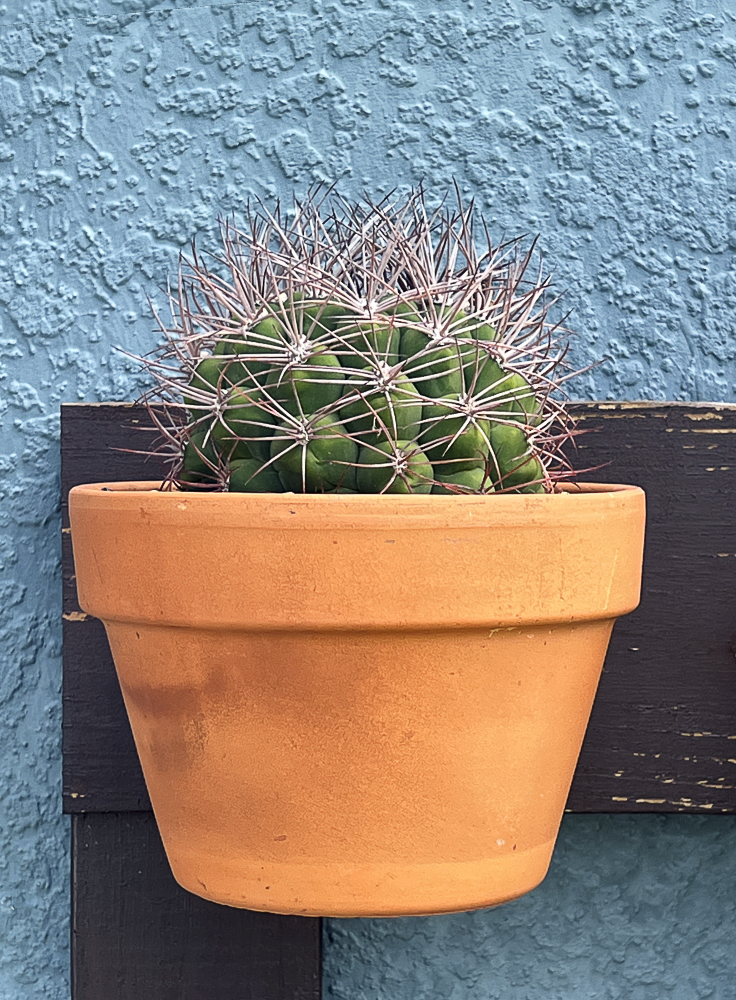
Giant Chin Cactus
🌵 Gymnocalycium saglionis Care Guide
Common Name: Giant Chin Cactus
Botanical Name: Gymnocalycium saglionis
Type: Globular cactus
Hardiness Zone: USDA 9–11
Growth Habit: Slow-growing, solitary, ribbed sphere with pronounced spines; can reach up to 12 inches in diameter over decades
☀️ Light
Bright light, filtered is best.
Outdoors: Partial sun or dappled light is ideal—intense afternoon sun can scorch it.
Indoors: Place near a bright window with filtered sunlight (east or west exposure preferred). Supplement with grow lights if light is insufficient.
💧 Water
Water infrequently—less is more.
Spring/Summer (growing season): Water deeply only when the soil is fully dry.
Fall/Winter (dormant): Cut back drastically—once every 4–6 weeks or skip entirely.
Avoid overhead watering; always check the base for moisture before watering.
🪨 Soil
Fast-draining is non-negotiable.
Use a cactus/succulent mix with added pumice, perlite, or coarse sand.
Avoid moisture-retentive ingredients like peat moss.
🌡️ Temperature & Humidity
Dry and warm, with a winter cool-down.
Ideal range: 65–85°F (18–29°C)
Tolerates down to 25°F (-4°C) if dry and well-established
Avoid high humidity—ensure airflow if indoors
🪴 Potting & Repotting
Use a clay or terracotta pot with drainage holes
Every 3–4 years or when root-bound.
Choose a shallow, wide pot with drainage holes.
Best repotted in early spring before the growing season.
🌸 Flowering
Produces funnel-shaped blooms in shades of pink or white.
Blooms appear in late spring to early summer.
Flowers emerge from the apex and open during the day.
Needs strong light and maturity to flower (typically several years old).
☠️ Toxicity Warning
Non-toxic to pets and humans.
But those spines hurt—keep out of high-traffic areas or away from curious pets.
🌱 Propagation
Primarily by seed.
Offsets are rare—this species usually grows solitary.
Germination can take weeks; use a warm, sterile mix and keep lightly moist.
🚫 Pests & Problems
Watch for: Mealybugs, spider mites, and root rot
Prevention: Let soil dry completely, inspect regularly, and use neem oil or insecticidal soap as needed
Yellowing or mushy base = likely overwatering or poor drainage
☠️ Lifespan Overview
☠️ Can live 50–100+ years with proper care.
This is a true heirloom cactus—slow but enduring.
💡 Pro Tips
Let it “rest” in winter by keeping it cool and dry—this encourages better blooms in spring.
Rotate regularly indoors to prevent leaning.
Don’t rush growth—this cactus thrives on patience and neglect.